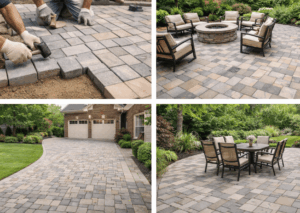
In Southern California, our outdoor spaces are essentially extensions of our living rooms. Whether it is a driveway that welcomes you home after a long commute on the 405, a patio hosting summer barbecues, or a pool deck where your family gathers, the ground you walk on matters. For decades, poured concrete was the default choice for Los Angeles homeowners. However, if you drive around your neighborhood, you will likely notice a common theme: cracks.
As an experienced general contractor serving the greater Los Angeles area, Pacific Coast Developers has seen firsthand how traditional paving materials struggle against time and the elements. This is why we increasingly recommend interlocking paver installation as the superior alternative. Pavers are not just an aesthetic upgrade; they are a structural investment that outperforms concrete and asphalt in durability, safety, and long-term value.
Here is why making the switch to pavers is the smartest decision for your property in 2026.
The Science of Durability: Why Concrete Cracks
To understand why pavers are superior, you must first understand the flaw of poured concrete. Concrete is a rigid slab. When the ground beneath it shifts due to settling, moisture changes, or tree roots, the slab cannot flex. Instead, it snaps. This results in the unsightly, jagged cracks that plague driveways across Tarzana and Pacific Palisades.
Interlocking pavers operate on a completely different structural principle known as a “flexible pavement system.” A paver installation consists of individual stones fitted tightly together over a bed of compacted sand and aggregate base. This design allows for independent movement. When the earth moves, the pavers adjust slightly with the friction of the joint sand, distributing the load without snapping.
Important: Industry standards indicate that high-quality concrete pavers are manufactured to withstand at least 8,000 PSI (pounds per square inch) of pressure. This makes them roughly three to four times stronger than a standard poured concrete slab. For a driveway that holds heavy SUVs or trucks, this added strength is a critical safeguard against wear and tear.
Ideally Suited for Seismic Zones
Living in Los Angeles means living with the reality of earthquakes. While we often think about how our house structures hold up during a tremor, we rarely think about our hardscape.
In a seismic event, rigid materials like concrete and asphalt are prone to catastrophic failure because they are brittle. They resist the ground movement until they reach a breaking point. Pavers, however, are segmented. During a mild to moderate earthquake, a paver driveway can “undulate” with the ground waves. While the surface might become slightly uneven, the material itself rarely breaks.
This “self-healing” nature means that after the ground settles, repairs are often as simple as lifting the affected stones, re-leveling the sand base, and placing the stones back. There is no need for jackhammers or expensive demolition crews.
Superior Drainage and Environmental Benefits
Water management is a major concern in California. Traditional concrete creates an impermeable barrier. When it rains, water rushes off the surface, picking up oil and pollutants before overwhelming storm drains. This runoff can also pool near your home’s foundation, potentially causing structural water damage.
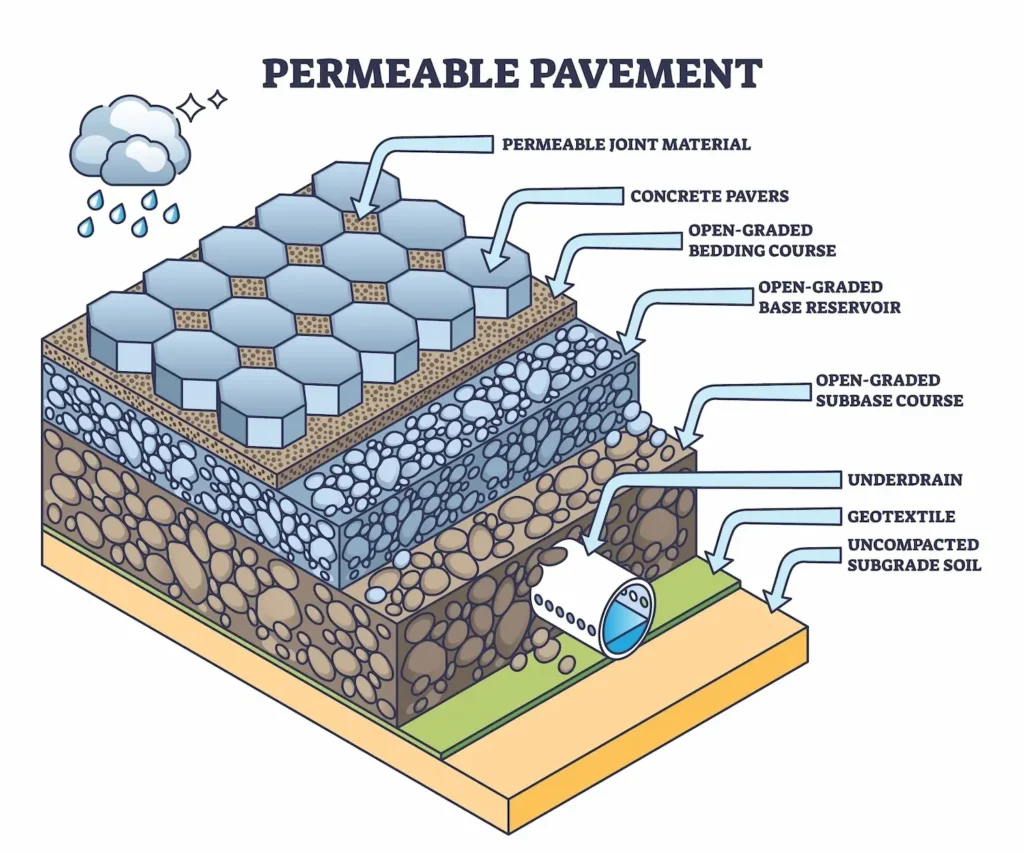
Many modern paver systems are designed to be permeable. This means they allow water to filter through the joints and return naturally to the soil below. According to the U.S. Environmental Protection Agency (EPA), permeable pavements are a best practice for managing stormwater. By installing permeable pavers, you reduce runoff and help recharge the local groundwater table.
Furthermore, because pavers have a textured surface and joints, they offer better skid resistance than smooth concrete. This makes them significantly safer for pool decks where slip-and-fall accidents are a primary concern for families with children or elderly relatives.
Aesthetics and Curb Appeal
Beyond the structural benefits, the design versatility of pavers is unmatched. Poured concrete can be stamped or stained, but it will always look like a slab. Pavers offer a limitless palette of colors, shapes, textures, and patterns.
Whether your home is a Spanish Colonial in Beverly Hills or a Mid-Century Modern in the Valley, there is a paver style to match. You can mix and match colors to create borders, accents, or intricate patterns like herringbone or basket weave.
Design Tip: Using a darker border paver against a lighter field paver frames your driveway or patio, giving it a finished, high-end look that mimics the detailing of interior flooring. This immediate boost in curb appeal translates directly to property value. Real estate data consistently shows that attractive hardscaping is one of the top features that attracts buyers, offering a high return on investment (ROI) at resale.
The “Zipper” Repair Advantage
Maintenance is an inevitable part of homeownership. With concrete, if a utility pipe beneath your driveway bursts or needs replacing, the only option is to cut a trench through the slab. Even after the repair, you are left with a “scar” of new concrete that never perfectly matches the old, weathered section.
Pavers offer a distinct advantage here. If underground repairs are needed, the pavers can be “unzipped” or removed in the specific area, set aside, and then reinstalled once the work is done. Once the sand is swept back into the joints, the surface looks exactly as it did before. There are no patches, no scars, and no waste.
Additionally, if a single paver gets stained by a stubborn oil leak or chipped by a heavy impact, you can replace just that single stone. This modularity ensures your outdoor space maintains its pristine appearance for decades, rather than degrading slowly like asphalt.
The Installation Process: Why Expertise Matters
While pavers are an incredible product, they are not a DIY project. The longevity of the installation depends entirely on what happens under the stones.
Pacific Coast Developers follows a rigorous installation protocol to ensure stability:
- Excavation: We dig down to remove unstable topsoil.
- Sub-grade Preparation: The native soil is compacted to prevent settling.
- Base Layer: We install a thick layer of crushed aggregate rock, which is compacted in lifts to create a solid, non-shifting foundation.
- Bedding Sand: A precise layer of sand provides the final bed for the pavers.
- Installation and Jointing: The stones are laid, and polymeric sand (which hardens like grout but remains flexible) is swept into the joints to lock everything in place and prevent weed growth.
Cutting corners on the base layer is the primary reason why amateur paver jobs fail. Trusting a licensed, experienced contractor ensures that your investment won’t sink or shift after the first rainstorm.
Ready to Transform Your Home?
Your driveway and patio are the introduction to your home. They should be as resilient and beautiful as the rest of your property. If you are tired of looking at cracked concrete or fading asphalt, it is time to consider the long-term value of pavers. At Pacific Coast Developers, we combine over 25 years of construction expertise with a passion for design to build outdoor spaces that last a lifetime.
Contact us today for a free consultation. Let us show you how we can elevate your curb appeal and give you a driveway that is built to handle life in Los Angeles.