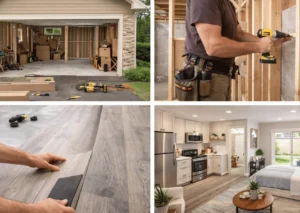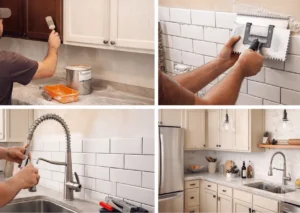
Embarking on a whole house renovation in the Greater Los Angeles area is an exhilarating journey. It is the process of taking a property that has “potential” and transforming it into your dream sanctuary. Whether you are modernizing a mid-century home in the San Fernando Valley, restoring a craftsman bungalow in Pasadena, or updating a beachside property in Santa Monica, the goal is the same. You want a home that reflects your lifestyle and increases your property value.
However, the path to that dream home is paved with potential pitfalls. Los Angeles is a unique market with its own set of rules, costs, and architectural standards. A renovation strategy that works in other parts of the country can easily lead to disaster here. The stakes are high, and the investment is significant.
To help you navigate this complex process, we have identified the top five mistakes homeowners make during major renovations in Los Angeles and how you can avoid them.

1. Underestimating the “Red Tape” and Timeline
In many cities, getting a permit is a formality. In Los Angeles, it is a project in itself. One of the most common and costly mistakes homeowners make is assuming their renovation timeline is entirely within their control. They create a schedule based on construction time but fail to account for the administrative time required by the city and county.
The regulatory landscape here is dense. You are not just dealing with standard building codes. Depending on your location, you might be subject to the Coastal Commission if you are near the ocean, or the Hillside Ordinance if you are in the canyons. Furthermore, many neighborhoods in LA, such as Hancock Park or West Adams, fall under Historic Preservation Overlay Zones (HPOZ). In these zones, you cannot simply change windows or alter the façade without a rigorous review process that ensures the historical integrity of the neighborhood is preserved.
Ignoring these requirements or assuming you can “fly under the radar” is a recipe for a stop-work order. These orders can halt your project for months and accrue significant fines. The solution is to start the permitting process early and work with a team that understands the specific nuances of the Los Angeles Department of Building and Safety (LADBS). A professional team knows how to navigate the plan check process efficiently, ensuring your project remains legal and moves forward without indefinite delays.
2. Neglecting the “California Flow” in Design
Los Angeles real estate is driven by a specific lifestyle. We are famous for our indoor-outdoor living. A major mistake homeowners make is compartmentalizing their home in a way that ignores this competitive advantage.
Renovating a home with a layout that is too closed off or formal can hurt your resale value. Today’s buyers and homeowners in Southern California expect a seamless transition between the kitchen, the living area, and the backyard. They want natural light to flood the space.
When planning your renovation, avoid keeping the kitchen isolated in the back of the house with small windows. Instead, consider structural changes that open up the rear of the home. Think about installing large bi-fold or pocket doors that vanish, merging your living room with your patio. If you ignore the exterior living space during your renovation, you are essentially ignoring half of your home’s potential square footage. Your landscape and hardscape should be viewed as an extension of your interior design, not an afterthought.
3. Miscalculating the Financial Buffer

Budgeting for a renovation in Los Angeles requires a different math than in other regions. The cost of labor and materials here is higher than the national average. Homeowners often make the mistake of budgeting based on online calculators that use national data, leading to severe sticker shock once bids come in.
Beyond the baseline costs, many people fail to hold a large enough contingency fund. The standard advice is often to keep a 10 percent buffer. In the context of a whole house renovation in LA, specifically with older housing stock, a 20 percent contingency is safer.
Older homes in Los Angeles often hide expensive secrets behind their walls. You might open a wall in a 1920s Spanish Colonial and discover knob-and-tube wiring that needs a total electrical upgrade. You might find cast iron plumbing that has corroded or foundations that need seismic retrofitting to withstand future earthquakes. These are not optional upgrades; they are safety necessities. If your budget is maxed out before you even break ground, these discoveries can derail the entire project.
4. Hiring Based Solely on the Lowest Bid
It is human nature to want the best deal. However, in the construction industry, the lowest bid is rarely the final price. A contractor who bids significantly lower than the competition is often cutting corners, using inferior materials, or, most commonly, underestimating the scope of work to get your signature.
Once the project begins, these low-bid contractors often hit you with “change orders.” These are additional charges for work that should have been included in the original scope. Suddenly, that bargain price balloons to cost more than the higher, more honest bids you originally rejected.
Furthermore, California has strict laws regarding worker classification and insurance. If you hire an unlicensed team or a “handyman” for a major structural renovation to save money, you expose yourself to massive liability. If a worker is injured on your property and the contractor does not have workers’ compensation insurance, you could be sued. Always verify that your general contractor is licensed, bonded, and insured. In a high-value market like Los Angeles, the peace of mind and quality assurance of a reputable builder are worth the investment.
5. Ignoring Energy Efficiency and Title 24
California leads the nation in energy efficiency standards. A common oversight during renovations is failing to plan for Title 24 compliance. This is the state’s energy code, and it dictates everything from the type of windows you install to the insulation in your attic and the efficiency of your lighting.
Some homeowners view these regulations as a nuisance, but ignoring them is a mistake for two reasons. First, you will not pass your final inspection without compliance. Second, you are missing an opportunity to future-proof your home.
Los Angeles gets hot. The San Fernando Valley regularly sees triple-digit temperatures in the summer. A renovation is the perfect time to upgrade your HVAC system, install cool roofing materials, and upgrade to high-performance windows. Neglecting these elements means your beautifully renovated home will be uncomfortable to live in and expensive to cool. By embracing energy efficiency, you lower your monthly utility bills and increase the home’s appeal to eco-conscious buyers in the future.
Plan Your Renovation with Confidence
A whole house renovation is likely one of the biggest investments you will ever make. It is a complex puzzle of design, engineering, bureaucracy, and finance. While the potential for mistakes is real, they are entirely avoidable with the right partner by your side. You need a team that understands the local landscape, respects your budget, and shares your vision for a beautiful, functional home.
Pacific Coast Developer serves the Greater Los Angeles area with integrity and expertise. We specialize in navigating the complexities of large-scale renovations, ensuring that your project stays on track, up to code, and true to your design dreams. From the initial blueprint to the final walkthrough, we are committed to excellence.
Contact us today to schedule a consultation and take the first step toward the home you deserve.